COVID-19 Testing Clinic in Denton, TX
COVID-19 continues to circulate, and its symptoms can look very similar to the flu, a cold, or other respiratory infections. Testing can help clarify whether SARS-CoV-2, the virus that causes COVID-19, may be responsible for your symptoms and can help guide decisions about treatment and reducing the spread of illness. Dr. Andrew J. Blankenau, MD, at Minor Emergency of Denton provides COVID-19 testing and evaluation for patients in Denton, TX. For more information, please contact us or simply walk in! We are conveniently located at 4400 Teasley Ln #200 Denton, TX 76210.
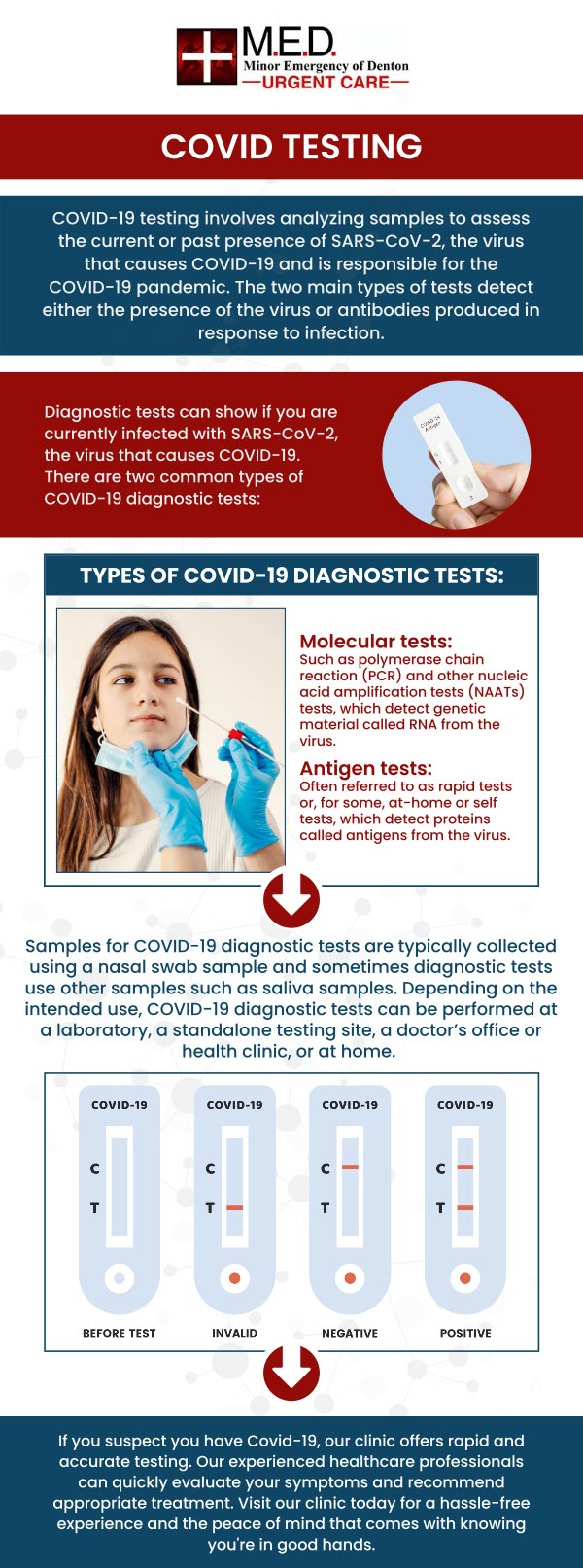
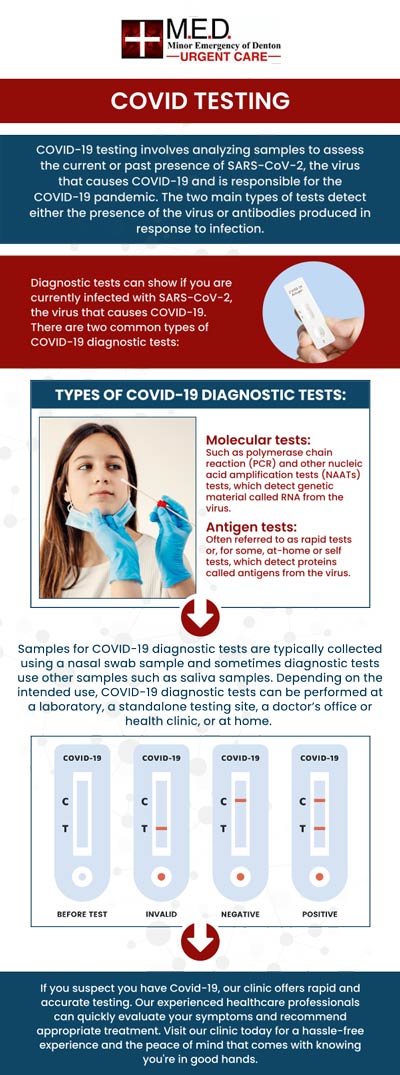
Table of Contents:
What are the current symptoms of COVID-19?
When should you consider getting tested for COVID-19?
What types of COVID-19 tests are available and how do they differ?
What should you expect during a COVID-19 testing visit?
What does a positive or negative COVID-19 test result mean for your next steps?
How should you manage COVID-19 Symptoms?
Patient Safety: When Should COVID-19 Symptoms Be Considered an Emergency?
Can you get a COVID-19 test if you have no symptoms but were recently exposed?
Do you need an appointment for COVID-19 testing at Minor Emergency of Denton?
How quickly can you receive your COVID-19 test results?
Can you be tested for COVID-19 and the flu during the same visit?
What should you bring with you for a COVID-19 testing visit?
When should COVID-19 symptoms be evaluated in an emergency room instead of an urgent care clinic?
How Does Dr. Andrew J. Blankenau, MD, Evaluate Patients With COVID-19 Symptoms and Determine the Appropriate Testing and Next Steps at Minor Emergency of Denton?
Symptomatic patients seeking COVID-19 testing are evaluated to help determine appropriate testing and next steps. Dr. Blankenau is a board-certified family medicine physician with more than 30 years of clinical experience. He earned his medical degree from the University of Nebraska College of Medicine and completed a family medicine residency at Lincoln Medical Education Partnership.
COVID-19 symptoms can vary from person to person and may change as new variants circulate. There is not one specific “new” symptom that can reliably identify a current COVID-19 infection without testing.
Current possible symptoms include:
• Fever or chills
• Cough
• Sore throat
• Congestion or runny nose
• Shortness of breath or difficulty breathing
• Fatigue
• Muscle or body aches
• Headache
• New loss of taste or smell
• Nausea or vomiting
• Diarrhea
Symptoms may be mild at first and can sometimes become more severe. Because COVID-19, influenza, and other respiratory illnesses can cause many of the same symptoms, testing and clinical evaluation may be helpful when the cause is unclear.
Consider COVID-19 testing if you develop symptoms that could be caused by the virus, particularly fever, cough, sore throat, congestion, fatigue, body aches, or other respiratory symptoms.
Testing can also be useful after a known exposure, before spending time with someone who has a higher risk of severe illness, or when a healthcare professional recommends testing based on your symptoms and medical history.
People with symptoms who are at higher risk for severe COVID-19 should seek medical care promptly rather than waiting several days to see whether symptoms resolve. Older age, certain chronic medical conditions, and a weakened immune system can increase the risk of serious illness. Some COVID-19 treatments are most effective when started within the first 5–7 days after symptoms begin.
The two main tests used to diagnose a current COVID-19 infection are antigen tests and molecular tests, including nucleic acid amplification tests such as PCR.
Rapid antigen tests detect viral proteins. They can provide results quickly and may be useful when someone currently has symptoms. However, antigen tests are less sensitive than molecular tests, particularly early in an infection. A single negative antigen test does not always rule out COVID-19.
Molecular tests, including PCR and other NAAT tests, detect genetic material from the virus. These tests are generally more sensitive and can be particularly helpful when COVID-19 is strongly suspected despite a negative rapid antigen test.
Minor Emergency of Denton currently lists point-of-care Sofia 2 Flu + SARS antigen testing, which can evaluate for influenza A, influenza B, and SARS-CoV-2. The clinic also lists lab-based COVID-19 viral testing.
The clinic additionally lists COVID-19 antibody testing. Antibody testing is different from diagnostic viral testing. An antibody test may provide evidence of a previous immune response to infection or vaccination, but it should not be used to diagnose an active COVID-19 infection or determine whether someone is currently contagious.
The appropriate testing process depends on your symptoms, exposure history, medical conditions, and the type of test being performed.
At Minor Emergency of Denton, symptomatic patients seeking COVID-19 testing are evaluated by a healthcare provider so that their symptoms and treatment needs can be considered along with testing. A nasal swab may be collected for rapid or laboratory-based viral testing.
For patients with cough, fever, congestion, body aches, or other respiratory symptoms, evaluation may also help determine whether another illness, such as influenza, needs to be considered.
Minor Emergency of Denton operates as a walk-in clinic and currently states that an appointment is not necessary during regular clinic hours. The practice is located at 4400 Teasley Ln #200 Denton, TX 76210.
A positive diagnostic COVID-19 test generally means SARS-CoV-2 was detected. Patients should take steps to reduce the chance of spreading the infection to others and discuss treatment promptly if they have risk factors for severe illness.
Current CDC respiratory-virus guidance recommends staying home and away from others while symptoms are present. People can generally return to normal activities once their symptoms have been improving overall for at least 24 hours and they have been fever-free for at least 24 hours without fever-reducing medication. For the following five days, added precautions such as wearing a well-fitting mask, improving ventilation, distancing, practicing good hygiene, or testing can help reduce transmission.
A negative antigen test does not always mean that you do not have COVID-19. The infection may simply be too early for the antigen test to detect. The FDA recommends repeating a negative antigen test after 48 hours.
People with symptoms should generally perform at least two antigen tests 48 hours apart. Those without symptoms should generally perform at least three tests over five days, with 48 hours between tests. Molecular testing may also be considered when symptoms or exposure make COVID-19 likely despite negative rapid tests.
Many people with mild COVID-19 can recover with supportive care, rest, fluids, and appropriate symptom management. However, treatment decisions depend on age, medical history, medications, the severity of symptoms, and the risk of complications.
People at increased risk for severe illness should contact a healthcare professional promptly even when their symptoms initially seem mild. Current antiviral treatments for eligible patients need to be started early—typically within 5–7 days after symptoms begin. Certain medications can have important drug interactions, contraindications, or other clinical considerations, so treatment should be selected by a qualified healthcare professional based on the individual patient.
Dr. Blankenau can evaluate symptoms in the context of the patient’s health history and determine whether testing, supportive management, additional evaluation, or referral is appropriate.
Most mild respiratory symptoms can be evaluated in an outpatient or urgent care setting, but some symptoms require emergency medical attention.
Seek emergency care or call 911 for warning signs such as:
• Trouble breathing
• Persistent pain or pressure in the chest
• New confusion
• Inability to wake or stay awake
• Pale, gray, or blue-colored skin, lips, or nail beds, depending on skin tone
• Any other symptom that is severe or rapidly worsening
• Patients should not delay emergency care in order to obtain routine COVID-19 testing first.
Older adults and people with chronic lung disease, heart disease, diabetes, kidney disease, cancer, weakened immune systems, or certain other medical conditions may have a greater risk of developing severe COVID-19. These patients should seek medical advice early if symptoms develop.
Yes. Someone who has been exposed to COVID-19 may be infected even without symptoms. For people without symptoms, testing immediately after exposure can be too early to detect infection. FDA guidance recommends waiting at least five full days after exposure before testing when no symptoms are present. If an antigen test is negative, repeat testing is recommended because a single negative result can miss an early infection.
Minor Emergency of Denton currently operates as a walk-in clinic and states that patients do not need an appointment for COVID-19 testing during regular clinic hours. The clinic is currently open Monday through Friday from 8:00 a.m. to 5:00 p.m. Patients may contact the clinic before arriving to confirm current testing availability and hours.
Result times depend on the type of test performed. Minor Emergency of Denton currently lists Sofia 2 Flu + SARS antigen testing, which can provide point-of-care results in approximately 15 minutes. Laboratory-based tests generally take longer because specimens must be processed by a laboratory. Patients should confirm current turnaround times at the time of testing because laboratory processing times can vary.
Yes, when clinically appropriate. Minor Emergency of Denton currently lists the Sofia 2 Flu + SARS antigen test, which is designed to detect influenza A, influenza B, and SARS-CoV-2. Testing for more than one respiratory virus can be useful because COVID-19 and influenza may cause similar symptoms.
Bring any identification and insurance or payment information requested by the clinic. It can also be helpful to have a current medication list and information about important medical conditions, recent COVID-19 exposure, when symptoms began, and any home test results.
Patients should contact Minor Emergency of Denton if they have questions about current testing fees, insurance coverage, or documents required for the visit.
Emergency care is appropriate for serious symptoms such as significant difficulty breathing, persistent chest pain or pressure, new confusion, inability to stay awake, or concerning changes in skin, lip, or nail-bed color. Call 911 for a life-threatening emergency. Patients who are stable but need testing or evaluation for mild to moderate respiratory symptoms may be appropriate for an urgent care visit.
COVID-19 symptoms do not look exactly the same in every patient. Dr. Andrew J. Blankenau, MD, brings more than three decades of family medicine experience to the evaluation of patients with respiratory symptoms at Minor Emergency of Denton.
For a symptomatic patient, the evaluation may consider when symptoms started, recent exposure to COVID-19 or other respiratory illnesses, the severity of symptoms, age, underlying medical conditions, medications, and other factors that can affect the risk of complications. Appropriate COVID-19 or combined flu/COVID testing can then be considered based on the clinical situation.
This individualized approach is especially important for patients at increased risk of severe COVID-19 because early evaluation can help determine whether additional treatment or referral should be considered within the limited treatment window.
Patients in Denton and surrounding communities who need COVID-19 testing or evaluation for respiratory symptoms can visit Minor Emergency of Denton during current walk-in clinic hours. Patients with severe or life-threatening symptoms should call 911 or seek emergency medical care instead of waiting for an urgent care visit. For more information, please contact us or simply walk in! We are conveniently located at 4400 Teasley Ln #200 Denton, TX 76210. We serve patients from Denton TX, Corinth TX, Highland Village TX, Little Elm TX, Flower Mound TX, Lewisville TX, and Southlake TX.
CDC — Symptoms of COVID-19
CDC — Testing for COVID-19
CDC — Preventing Spread of Respiratory Viruses When You’re Sick
CDC — COVID-19 Treatment Clinical Care for Outpatients
CDC — COVID-19 Risk Factors
FDA — Understanding At-Home COVID-19 Antigen Test Results
FDA — COVID-19 Antibody Testing Information
Check Out Our 5 Star Reviews